A landscaping customer is not buying a service, they are buying a result they cannot picture. They know their garden is a mess. They do not know what it could look like, what it would cost, or whether the crew turning up will be careful with the property. Almost everything a landscaping website needs to do follows from that.
Lenny’s Landscaping serves Morris County. This is about what actually persuades someone to let a contractor onto their property, and why photographs do more of that work than any amount of copy.
Key Takeaways
- Photographs of finished work are the product. For a trade, they outperform written claims about quality by a wide margin.
- Before-and-after pairs work better than finished shots alone, because the customer recognises their own situation in the before.
- Seasonal businesses need a site that stays useful out of season, not one that looks abandoned for five months.
- Naming the towns served matters, but only where each page says something true about that town.
What Is a Landscaping Customer Actually Deciding?
Three things, in order, and none of them is which company has the best adjectives.
Can they do the kind of work I need? Landscaping covers a wide range: lawn maintenance, hardscaping, planting design, drainage, snow clearance. A homeowner with a drainage problem is not served by a page listing all of it without detail.
Will the result look good? This is the question copy cannot answer. The customer has no way to imagine the finished outcome, which is why the visual evidence carries the decision.
Can I trust these people on my property? A residential job means strangers with machinery on someone’s land for several days. That is a higher-trust purchase than most local services, and it is why named people, real photographs and local specificity matter more here than in a category where nobody visits your home.
Why Photographs Do the Selling
Because they are the only element on the page a visitor can verify with their own eyes.
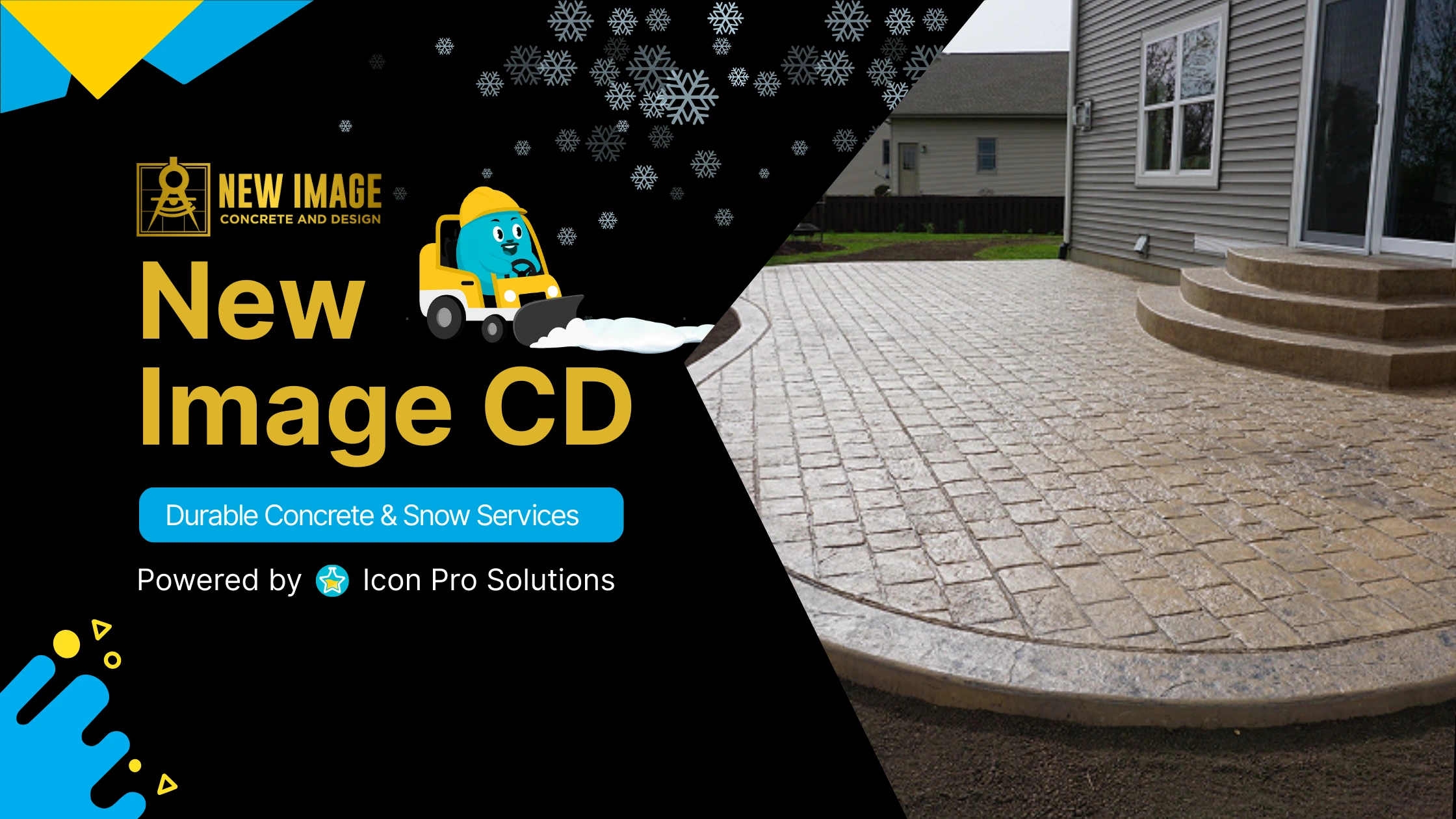
A claim about quality workmanship is unfalsifiable and every competitor makes it. A photograph of a finished patio is evidence, and an experienced homeowner can read a great deal from it: whether the edges are straight, whether the joints are consistent, whether the planting is mature or freshly dropped in.
Three practical rules make the difference between a gallery that sells and one that decorates:
- Use before-and-after pairs, not just finished shots. The finished photograph shows craft. The pair shows transformation, and transformation is what the customer is actually buying. It also lets them recognise their own garden in the before.
- Use real project photographs, not stock. Stock imagery of an immaculate garden in the wrong climate is recognisable and it undermines everything around it. A slightly imperfect real photograph is worth more than a perfect irrelevant one.
- Caption them. What the job was, roughly how long it took, what the constraint was. A caption turns a photograph into a miniature case study.
This is also why the gallery should not be buried behind a navigation item called “Gallery” and nothing else. Work belongs on the service pages, next to the service it demonstrates.
How Do You Handle a Seasonal Business?
This is the structural problem specific to landscaping, and it is usually ignored until the site has been live for a year.
Demand is concentrated in a few months. Snow services invert that, which is a genuine advantage: it gives the business something to say in winter. But a site built entirely around spring planting looks abandoned in January, and an abandoned-looking site is worse than a plain one.
Two things help. First, treat the off-season services as real content rather than a footnote, so there is always a current reason to visit. Second, plan for the site to say something true year-round: what to do in autumn to prepare, when to book for spring, what the winter service covers.
The commercial argument for this is that booking decisions are made earlier than the work happens. Someone deciding in February who does their spring garden is on the site out of season, and a site that has gone quiet suggests a business that has too.
What About Local Search?
For a trade serving a defined area, most of the work is not on the website at all. A complete Google Business Profile, contact details that are identical everywhere they appear, and reviews collected consistently will usually do more than additional pages.
On the site itself, naming the towns served matters, with the same caution that applies everywhere: a page per town only works when each says something specific and true about that town. Several near-identical pages with the place name swapped are thin content and have been detected as such for years. One page that names the service area honestly outperforms five hollow ones.
We cover the rest of this in more depth in our writing on local search.
What We Would Do Differently
Photography is the highest-value investment on a site like this, and it is almost always the part that gets postponed. A build should not complete without real project photographs, because the site cannot do its main job without them. Where they do not exist, arranging a photographer for a day is a better use of budget than an additional design refinement.
The second is that a trade site needs an owner for updates. New projects are the content that keeps it alive, and they only reach the site if someone has the job of putting them there. That is worth agreeing before launch rather than discovering a year later.
Frequently Asked Questions
What matters most on a landscaping website?
Photographs of completed work, organised by the service they demonstrate. For a trade where the customer cannot picture the result, visual evidence carries the decision.
Should before-and-after photos be used?
Yes, and they usually outperform finished shots alone. The customer recognises their own situation in the before image, which is what makes the after persuasive.
How should a seasonal business handle quiet months?
Give the off-season services genuine space, and publish content that is true year-round. A site that looks dormant for five months suggests a business that is, and booking decisions are often made out of season.
Does a landscaping company need a page for every town?
Only where each page says something specific about that town. Otherwise one honest service-area page performs better than several near-identical ones.
Is stock photography ever acceptable for a trade?
Rarely on the pages that sell. Customers recognise it, and it undermines the credibility of the real work shown alongside it.
Running a Trade Business?
If your site describes your work well and shows little of it, the fix is usually a day with a camera rather than a redesign.
See our work in the portfolio, look at web design, or get in touch.