There are two different questions hiding behind “a career at Figma”. One is how to get a job at the company that makes the tool. The other, which applies to far more people, is how to build a design career where Figma is the tool you work in every day. This covers both, honestly, because the first is a narrow path and the second is the realistic one.
Key Takeaways
- Most “Figma careers” are design jobs that use Figma, not jobs at Figma the company.
- Employers assess your systems thinking, not your knowledge of keyboard shortcuts.
- A portfolio that shows your reasoning beats one that shows polished screens with no explanation.
- Working at Figma itself is competitive, remote-friendly, and usually expects existing industry experience.
What Roles Actually Use Figma?
Figma is the working environment for most of the product design industry. The roles that live in it daily:
- Product designer. The broadest and most common. Designing features end to end: understanding the problem, designing the flow, testing, shipping.
- UI designer. Focused on the visual layer and on component systems.
- UX designer. Focused on flows, structure and research. Often works as much in FigJam as in the design file.
- Design systems designer. Maintains the shared component library other designers build from. A specialism that emerged because the problem is real and large.
- Design technologist. Sits between design and engineering, often building the coded version of the system.
For someone starting out, product design is the widest door, and design systems work is a strong specialism to grow into rather than start with.
What Do Employers Assess?
Not your speed in the tool. That is assumed and takes weeks to acquire.
Whether your files are structured
An interviewer opening your file learns a lot in ten seconds. Are layers named or is everything “Frame 247”? Are components used or is every button pasted? Are text and colour styles defined or set by hand each time?
This is read as a proxy for whether you can work in a team, because a file only you can navigate is a file nobody else can build on.
Whether you can explain a decision
“Why is this here?” is the question that decides interviews. The weak answer is that it looked better. The strong answer names the constraint: the user arrives from an email, so this has to make sense with no context; there are two states here because the data can be empty.
You do not need to have been right. You need to have been reasoning.
Whether you have shipped anything real
Work that went live, with real content and real constraints, outranks concept work every time. Concept redesigns of famous apps are common in junior portfolios and weak, because they have no constraints, no stakeholders and no wrong answers.
A small real project for a real person is worth more than an elegant redesign of a product you have never worked on.
What Should a Design Portfolio Contain?
Three to four projects, presented as short cases rather than image galleries. For each: what the problem was, what you tried, what you changed and why, and what you would do differently.
That last line is disproportionately effective. It signals judgement, which is the thing employers cannot train quickly.
Include at least one project where something went wrong. Interviewers are more interested in how you handle a bad outcome than in a sequence of perfect ones, because the job contains both.
What About Working at Figma Itself?
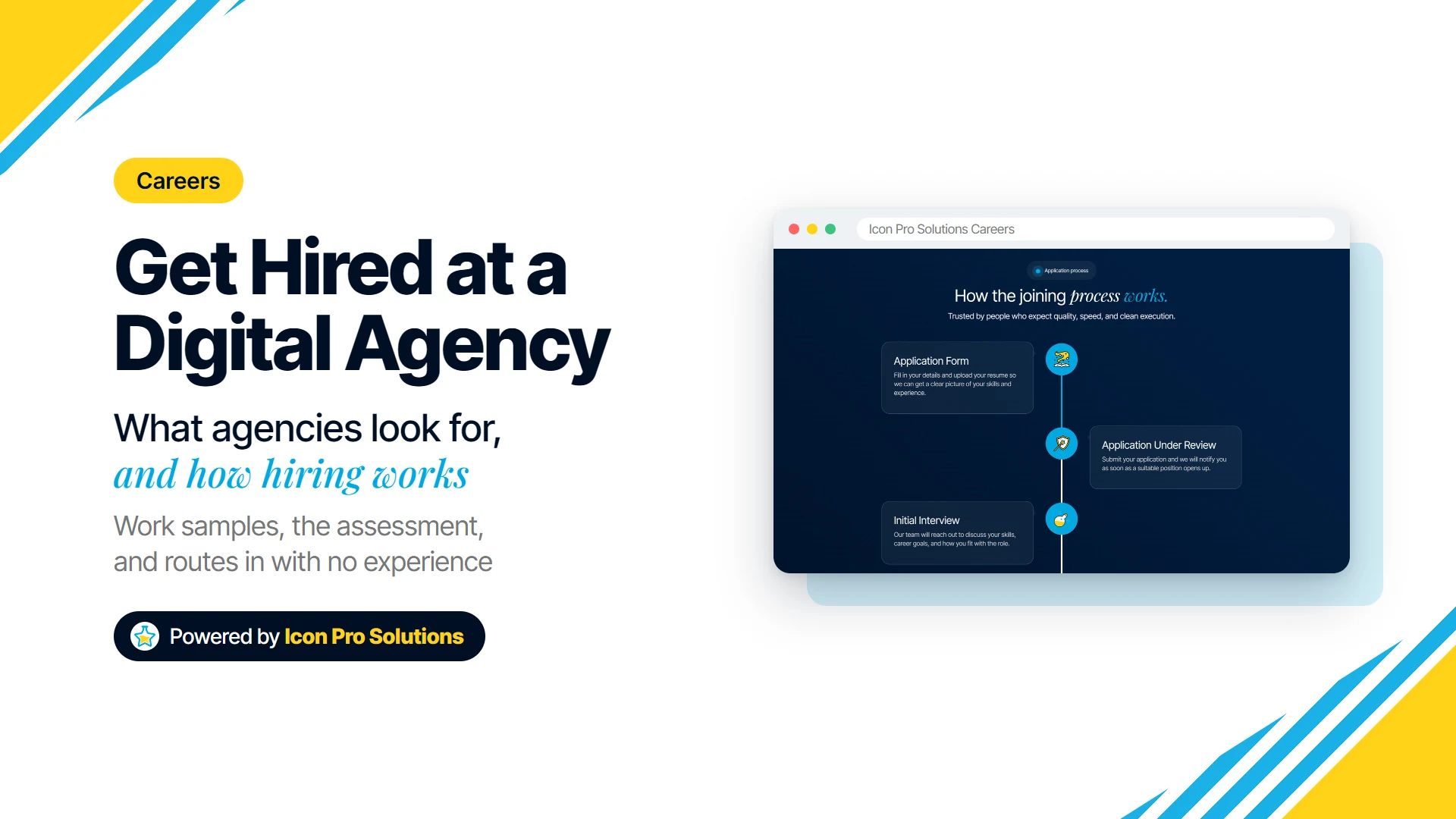
Worth being realistic. Figma is a well-known product company, it hires globally with substantial remote flexibility, and its roles attract very large numbers of applicants.
Most openings, in design and engineering alike, expect existing industry experience rather than being entry points into the field. Their design roles in particular tend to look for people who have shipped product at scale.
The practical route, if that is the goal, is to build a career using the tool first. Community contribution helps and is genuinely useful regardless: publishing plugins, widgets or community files is public evidence of skill that anyone can evaluate, and it is one of the few things that raises your visibility without a job first.
Check their own careers page for what is actually open rather than relying on second-hand descriptions, since roles and requirements change.
How Do You Get the First Design Job?
- Learn the fundamentals, not just the tool. Layout, hierarchy, type and spacing transfer everywhere and do not date.
- Build real things. For local businesses, community groups, anyone with an actual requirement.
- Learn components and variables properly. This is what separates a junior who can be given a system to work in from one who cannot.
- Get your work critiqued. By someone doing the job, not by friends. This is the fastest improvement available.
- Apply specifically. A tailored application referencing the company’s actual product beats fifty generic ones.
Frequently Asked Questions
Do I need to know how to code to be a product designer?
No, and understanding what is expensive to build makes you considerably easier to work with. Reading code is more useful than writing it.
Is Figma enough, or do I need other tools?
Figma is enough for most interface roles. Familiarity with prototyping beyond basic linking, and with handoff practices, adds more than collecting additional design tools.
How long does it take to become employable as a designer?
Months of consistent practice with feedback, and the first year of real work teaches more than the preparation did. The bottleneck is usually finished work rather than knowledge.
Are design certifications worth it?
Rarely on their own. Portfolios dominate design hiring. A course is worth it for structure and critique, not for the certificate at the end.
Should I specialise in design systems early?
Usually not. It is a strong specialism that builds on having shipped product. Learn to use a system well before trying to own one.
Building a Design Career?
The fastest improvement available to most people starting out is not another course. It is having one finished project critiqued properly by someone who does the work.
Our design courses run in person in Quetta and are built around finished portfolio work: see the courses page, current openings on the careers page, and the interface work we produce in our portfolio.