“IT company” is one of the vaguest terms in business. It covers the person who fixes your printer, the firm that manages your servers, the agency that builds your website, and the consultancy that rewrites your entire operating model. Hiring one without knowing which kind you need is how businesses end up paying for support they do not use while the problem they actually had goes unsolved.
This is a practical guide to what IT companies in Quetta actually do, how the categories differ, and how to work out which one your business needs before you start calling anyone.
Key Takeaways
- “IT company” covers at least four distinct businesses. Identify which you need before shortlisting, or you will compare firms that do different things.
- Managed support and project work are different commercial models: one is ongoing and preventative, the other has an end date.
- The most common mistake is buying infrastructure support when the actual problem is that a business process is manual.
- Response expectations, escalation and who owns your accounts matter more than the technology list on the website.
What Does an IT Company Actually Do?
Four broadly different businesses use the same label. They need different budgets, different contracts, and usually different suppliers.
Managed IT support
Keeping what you already have working: devices, email, networks, backups, user accounts, security patching. This is an ongoing relationship, usually monthly, and its value is measured in problems that do not happen.
You need this when staff losing access, email failing or a machine dying costs you real money in downtime, and you have nobody in-house whose job it is.
Infrastructure and hosting
Servers, cloud environments, domains, hosting, and the availability of the things your business runs on. Sometimes bundled with support, often separate.
You need this when your website or systems are business-critical and “the host will handle it” has stopped being a satisfying answer.
Software and web development
Building something: a website, a web application, an internal tool, an integration between systems that do not currently talk to each other. Project-shaped, with a defined end.
You need this when the problem is that something does not exist yet, or exists as a spreadsheet that three people email around.
Digital strategy and marketing technology
Making the things you have work commercially: search visibility, analytics, CRM, marketing automation. Ongoing, and measured in commercial outcomes rather than uptime.
You need this when the systems work fine and the problem is that not enough people are finding or converting through them.
Which One Does Your Business Need?
The fastest way to tell is to describe the problem without using any technology words.
If the sentence is “things keep breaking and nobody fixes them”, you need support. If it is “we do this by hand every week and it takes a day”, you need development. If it is “nobody finds us”, you need strategy and marketing. If it is “when our site goes down we do not know who to call”, you need infrastructure.
The expensive mistake is mismatching. A business that signs a monthly support contract because its invoicing is chaotic will still have chaotic invoicing twelve months later, because support keeps machines running and does not change how work is done.
Some firms cover more than one of these genuinely. Many list all four and are strong at one. Ask which of the four is their core business and what proportion of their work it represents. The answer is usually honest, because it is an easy question to answer if true.
What Should You Ask Before Signing?
For an ongoing support arrangement
- What is actually included, and what is billed separately? The gap between “managed” and “everything” is where disputes live.
- How do I report a problem, and what happens out of hours? You want the process, not a promise.
- Who is my contact, and who covers when they are away?
- What happens to my accounts and data if we end the contract? Ask before you need the answer.
For project work
- What is the scope, and what counts as done?
- How are changes handled and priced? Most overruns come from here.
- Who owns the code, domain, hosting and third-party accounts? The answer should be you, in writing, from day one.
- What support exists after delivery?
We take a public position on the ownership question: files, credentials and assets belong to the client from the start, with no lock-ins. Whichever firm you choose, “if we part ways tomorrow, what do I walk away with?” should get an immediate and complete answer.
What About Response Times?
Every IT company’s website mentions fast response. Very few define it, and the ones that do are easier to hold to it.
What is worth asking for is the shape rather than a marketing adjective: how problems are triaged, what counts as urgent, how you escalate when something is stuck, and whether there is a defined service level in the contract. A firm that can describe its triage has one. A firm that answers “we are very responsive” has told you nothing you can rely on when your email is down.
Be equally sceptical of guarantees that sound too tidy. An IT company does not control your internet provider, your power supply, or a third-party service outage, and one that promises outcomes across all of those has not thought it through.
Does It Matter That They Are in Quetta?
For managed support, local presence genuinely helps: hardware problems need hands, and someone who can be in the building is worth more than someone who cannot.
For development and strategy, it matters much less. Those are delivered remotely as standard, and the relevant question is track record rather than postcode.
Quetta’s technology sector has grown into something substantial, with teams here working on projects for clients internationally. That means real local capability, and it also means a wide spread of experience levels. Judge the firm, not the city.
What Are the Warning Signs?
- Everything is offered. A small firm claiming deep expertise in support, infrastructure, development, design and marketing is stretched somewhere.
- No named client work. Confidentiality is real, but a firm that can name nothing is a concern.
- Vague ownership. Domains and hosting registered “for convenience” on the supplier’s account cause expensive problems later.
- Guaranteed results. Nobody can guarantee a ranking, a conversion rate, or that nothing will ever break.
- A contract with no exit. Know how it ends before it starts.
Frequently Asked Questions
What is the difference between an IT company and a software house?
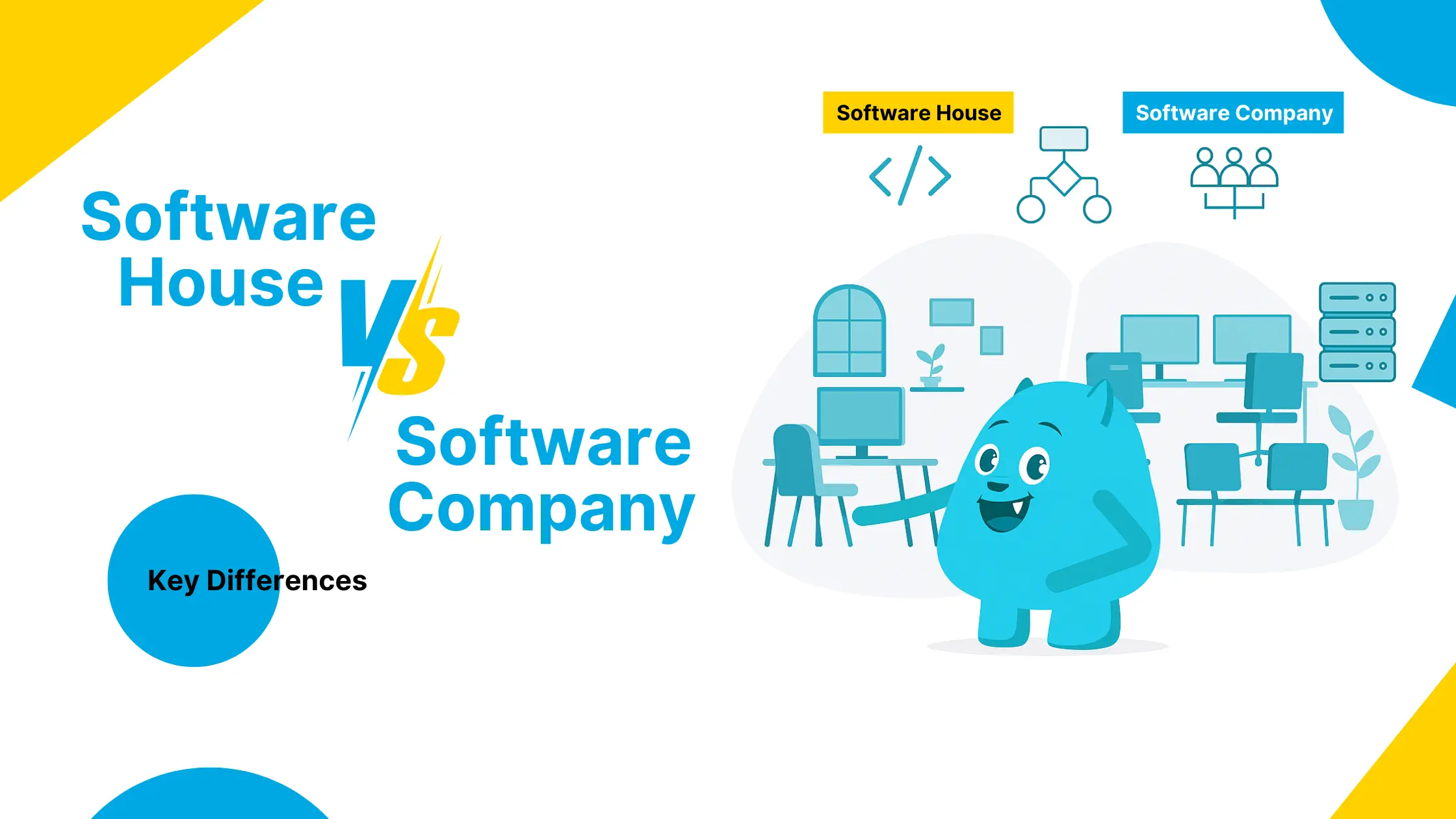
A software house builds software. An IT company may build software, or may principally keep existing systems running. The terms overlap, so ask what the firm’s core work actually is rather than relying on the label.
Should a small business outsource its IT?
Usually yes, until the point where downtime costs more than a salary. Most small businesses do not have enough consistent technical work to justify a full-time hire, but do have enough to justify someone being responsible.
What is the difference between managed support and pay-as-you-go?
Managed support is ongoing and preventative, so problems are caught earlier and the cost is predictable. Pay-as-you-go is reactive and can be cheaper when little goes wrong, and considerably more disruptive when something does.
How do I know if I am paying for support I do not need?
Look at what you actually used over the last year. If the contract covers infrastructure you no longer run, or devices you no longer have, it is worth renegotiating rather than renewing by default.
Can one company handle both my website and my IT support?
Some do both well, many are genuinely strong at one. Asking which is their core business, and what share of their work it is, usually produces a straight answer.
Working Out What You Need?
If you are not sure which of the four categories your problem falls into, that is a normal place to start and worth a conversation before a contract.
You can see our named work in the portfolio, look at what we actually offer under services, read how projects run on our process page, or get in touch.