If you are hiring a software house in Quetta, you are being asked to judge something you cannot inspect. You will not read the code or sit in the stand-ups. By the time you can tell whether the work is good, you have already paid for a lot of it.
Most advice skips that problem and tells you to check the portfolio and read reviews. This guide covers what you can actually evaluate before you commit: eight checks a non-technical buyer can run, the questions a serious firm asks, and the warning signs worth walking away over.
Key Takeaways
- You cannot assess code quality as a non-technical buyer, but you can assess process, ownership terms and who will actually do the work.
- What happens after launch is the most revealing question, because that is where we most often see agency relationships fail.
- Get code and account ownership in writing before you start, because recovering a project from a firm that holds the credentials is slow and expensive.
- A firm that asks hard questions before quoting is usually safer than one that quotes immediately.
- Compare firms on one written scope, not on headline prices.
What Does a Software House Actually Do?
A software house builds software for other businesses: web applications, internal systems, mobile apps, and integrations between tools you already use. The distinction from a freelancer is not size but continuity. A team carries a project through design, build, testing and support, and it survives one person being unavailable.
In practice most engagements fall into three shapes:
- A defined build. You know what you want, the scope is agreed, and the work has an end. A booking system, a customer portal or a website with custom functionality are typical.
- Ongoing development. A product that keeps evolving, where the team works in cycles rather than towards a single delivery date.
- Team extension. Developers working inside your process, managed by you, filling a capability you do not want to hire for permanently.
The three shapes need different contracts and different conversations. A firm that treats all three the same way has not thought about it much.
What Kinds of Software House Will You Meet in Quetta?
The firms calling themselves a software house in Quetta tend to fall into four shapes, and their websites often read the same:
- The in-house team. Engineers and designers on staff, usually the firm that asks difficult questions before quoting.
- The middleman. Passes your brief to a freelancer at a margin, which can work out fine but is rarely disclosed.
- The one-person firm. One capable developer with a company name: often good value, and one job offer away from your project stopping.
- The template reseller. Sells a ready-made theme in your colours as custom development.
A template site at a template price is a rational purchase. Paying custom prices for one is among the most common reasons we see buyers looking for a second software house.
How Do You Evaluate a Software House in Quetta Without Being Technical?
You evaluate a software house without being technical by checking the things that predict whether the engineering will go well, not the engineering itself. Eight checks do that job, and several of them cost nothing but an afternoon.
Check 1: Does the company legally exist?
Whether a firm exists as a registered company is something you can check yourself on the SECP’s public Company Name Search, which asks for “the company name or Incorporation No.” Each match is listed with its status and registration date, and the search needed no account when we tested it, so look up the exact registered name rather than accepting a screenshot. A sole trader may not appear, which is fine as long as the answer matches what you were told.
Check 2: Can you walk into the office?
Visiting the office is the cheapest due diligence available, and few buyers do it. An address on a contact page costs nothing, while a room with people working in it costs rent. A remote team that says so openly is a different case from a firm that implies an office it will not show you.
Check 3: Who will actually do the work?
Ask who will do the work, by name, because the people in the sales meeting are often not the people who build your project. A senior person scoping and a mid-level team building is a normal, healthy structure: what is wrong is not being told.
Ask too whether any work goes to subcontractors, which is fine when disclosed up front. A firm that answers with names has a real team, and a firm that answers with “our expert developers” is avoiding the question.
Check 4: Can you see live work they can name?
Ask for named projects that are live today, then open them yourself, because anonymous case studies and screenshots cannot be checked. Check that each site still works and looks maintained, and ask which parts the firm built.
Google’s PageSpeed Insights “reports on the user experience of a page on both mobile and desktop devices”, a second opinion beyond your own phone. Some client work genuinely cannot be shown, but a firm that can name nothing at all is telling you something.
Check 5: Who owns the code and the accounts?
You should own the source code, the domain, the hosting account, the repository and every account created for your project, in writing before any money moves. The usual failure is convenience, not malice: the agency registers the domain on its own account, and years later nobody knows who controls it.
ICANN’s Registrants’ Benefits and Responsibilities puts it plainly: “You will assume sole responsibility for the registration and use of your domain name.” The same page says “You must respond to inquiries from your Registrar within fifteen (15) days”, which goes badly when those emails reach a former developer. ICANN Lookup “gives you the ability to look up the current registration data for domain names”, though the real test is logging in to the registrar account yourself.
Whatever firm you choose, ask what you walk away with if you part ways tomorrow, and expect an immediate and complete answer.
Check 6: Is the scope written down in detail?
A scope is only real when it is written down and names the pages, the features, the integrations, who supplies the content, how many revisions you get and when each thing is due. A website of around eight pages is not a scope, and any timeline offered before the scope exists is a guess. Vague scopes are where the argument in month three is quietly being stored.
Check 7: What happens after launch?
Find out what support after launch looks like before you sign, because in our experience most disappointment with agencies starts after delivery, when something breaks and nobody answers. Ask whether support is included or separate, how long bug fixes are covered, who handles security updates and backups, and what an hour of future work costs. The answer matters less than whether the firm has one, and it belongs in the contract.
Our own answer is post-launch check-ins and a named contact rather than a ticket queue, with ongoing care as a separate, stated choice. Hold any firm to an equally specific one.
Check 8: Who will you be talking to?
Find out before signing whether you can reach the person who understands your project or only a salesperson. Ask how quickly messages are answered, how meetings run, and whether the team works comfortably in the language you prefer. You will spend months in the conversation, so the person who knows your project should be someone you can speak to.
What Should a Good Firm Ask You?
A good firm asks what the software is for, who uses it, what happens today without it, which systems it has to work with, and what success would look like. Those uncomfortable questions are the ones that produce an accurate scope. A firm that quotes before understanding the problem is guessing, and a guess has to be padded or it will be wrong.
Be wary of immediate enthusiasm, a fast number and no hard questions, which usually means the scope has not been understood and surfaces later as change requests. You only need to know the problem you are trying to solve, and a good firm will occasionally tell you no when an off-the-shelf tool would serve you better.
What Should You Ask a Software House in the First Meeting?
Five questions in the first meeting tell you more than any portfolio:
- What is the last project that went badly, and what did you change afterwards?
- Which part of my project are you least confident about?
- What do you need from me, and what happens to the timeline when I am slow?
- If I leave in a year, what exactly do I take with me?
- Who owns the hosting, and what does it cost in year two?
The first question is the whole interview. Every team that has shipped real software has a project that went sideways, and a team with no such story has either shipped very little or is not being straight with you.
Does Hiring Locally in Quetta Matter?
Hiring locally in Quetta matters less than it used to and more than people admit. Local presence buys you a room to sit in when something is going wrong, especially during discovery and testing, and shared context about your market. A local team you can visit is usually safer than one you can only email, but only if you actually hold it accountable.
Quality among firms in the city ranges widely, so treat location as one factor rather than the deciding one. A local firm with no named work is not a safer choice than a remote firm with a verifiable track record.
What Are the Warning Signs When Hiring a Software House?
The clearest warning signs when hiring a software house show up before any work starts, and each is a pattern we have seen cost somebody a rebuild:
- A quote far below the others. Something has been removed, usually something invisible like testing, security or the second half of the work.
- Full payment upfront. Milestone payments protect both sides, and paying everything first protects only one.
- No contract, only a chat thread. Messages are convenient right up until there is a dispute about what was agreed.
- Promised outcomes. Nobody can promise a search ranking or a conversion rate, and a firm that does is either inexperienced or not being straight with you.
- Famous logos with no explanation. Having worked near a large brand is not the same as having built something for it, so ask what the firm actually did.
Why Do Quotes From Software Houses in Quetta Differ So Much?
Quotes differ widely because each firm is usually pricing a different project that happens to share a name. The price moves with custom design or a template, a content site or an application with accounts, the number of systems it connects to, who supplies the content, and what support is bundled.
Write one scope, send the same document to every firm on your shortlist, and compare the replies rather than the totals. A cheap quote against a vague scope is not a saving: it is an invoice you have not been shown yet.
Frequently Asked Questions
What is the difference between a software house and a software company?
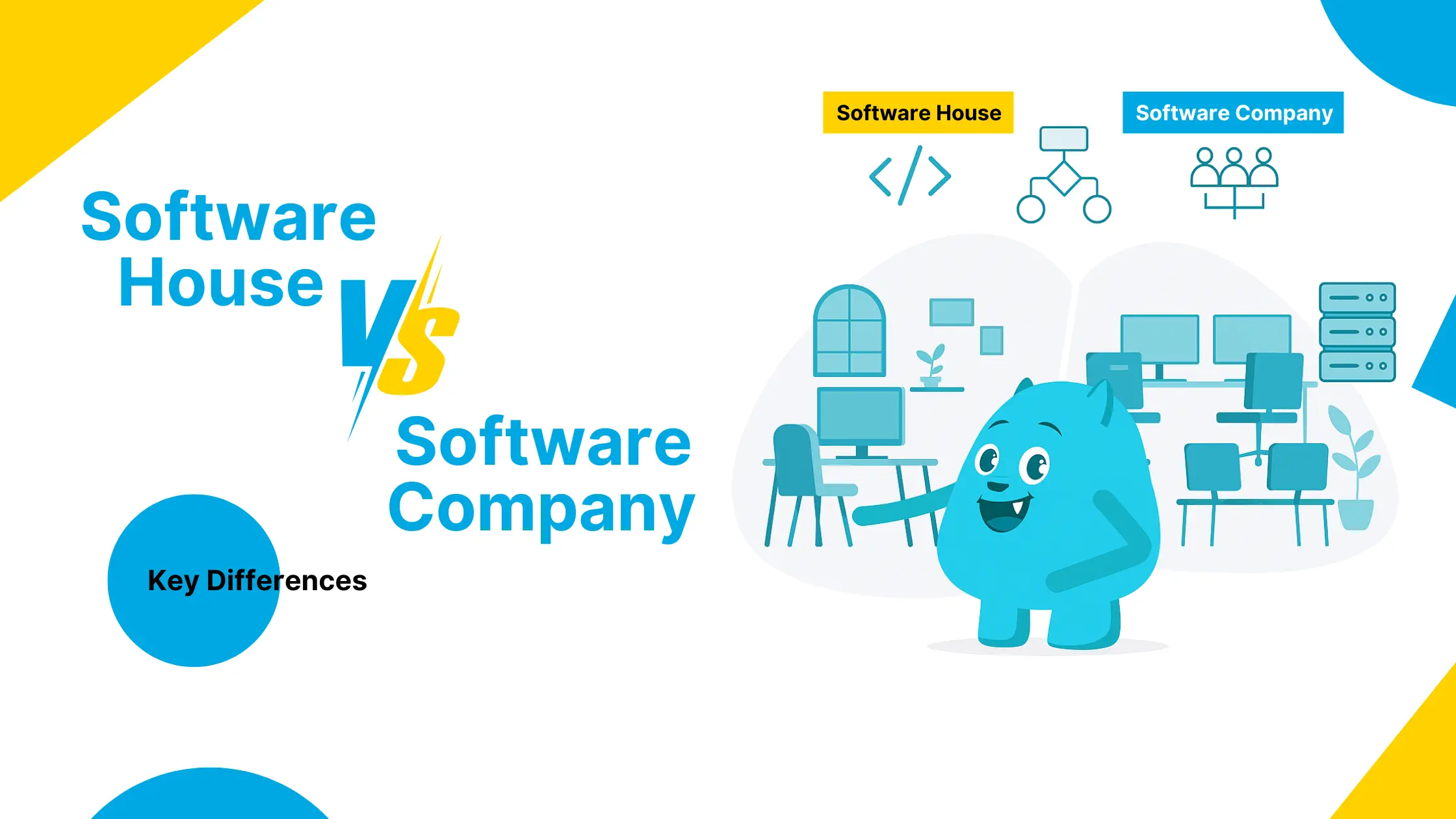
In common usage a software house builds software for clients on commission, while a software company often builds and sells its own product. The terms overlap, as do digital agency and IT solutions provider. What the firm actually does matters more than what it calls itself.
Should I hire a freelancer or a software house?
A freelancer suits small, well-defined work where you can manage the process yourself. A software house suits anything where continuity matters, where several skills are needed, or where you cannot afford the project to stop because one person is unavailable.
What should be in the contract with a software house?
The contract should cover scope, what counts as done, who owns the code and accounts, what support is included after launch, and how changes to scope are handled and priced. Ownership of source code, domain and hosting should never be assumed, so it belongs in writing before the first payment. Clear terms for scope changes prevent most disputes.
Looking for a Development Partner?
If you are weighing up a software house in Quetta, use the eight checks in this guide on every firm you shortlist. Our software house page sets out how we work: founder-led, a written scope before any quote, and your domain, hosting and logins in your name from day one.
You can see named work on our work page, read how we run projects on our process page, look at our services, or get in touch about what you are trying to build. We will come back with an honest view of scope, including the parts we think you should not pay for yet.